Landmark
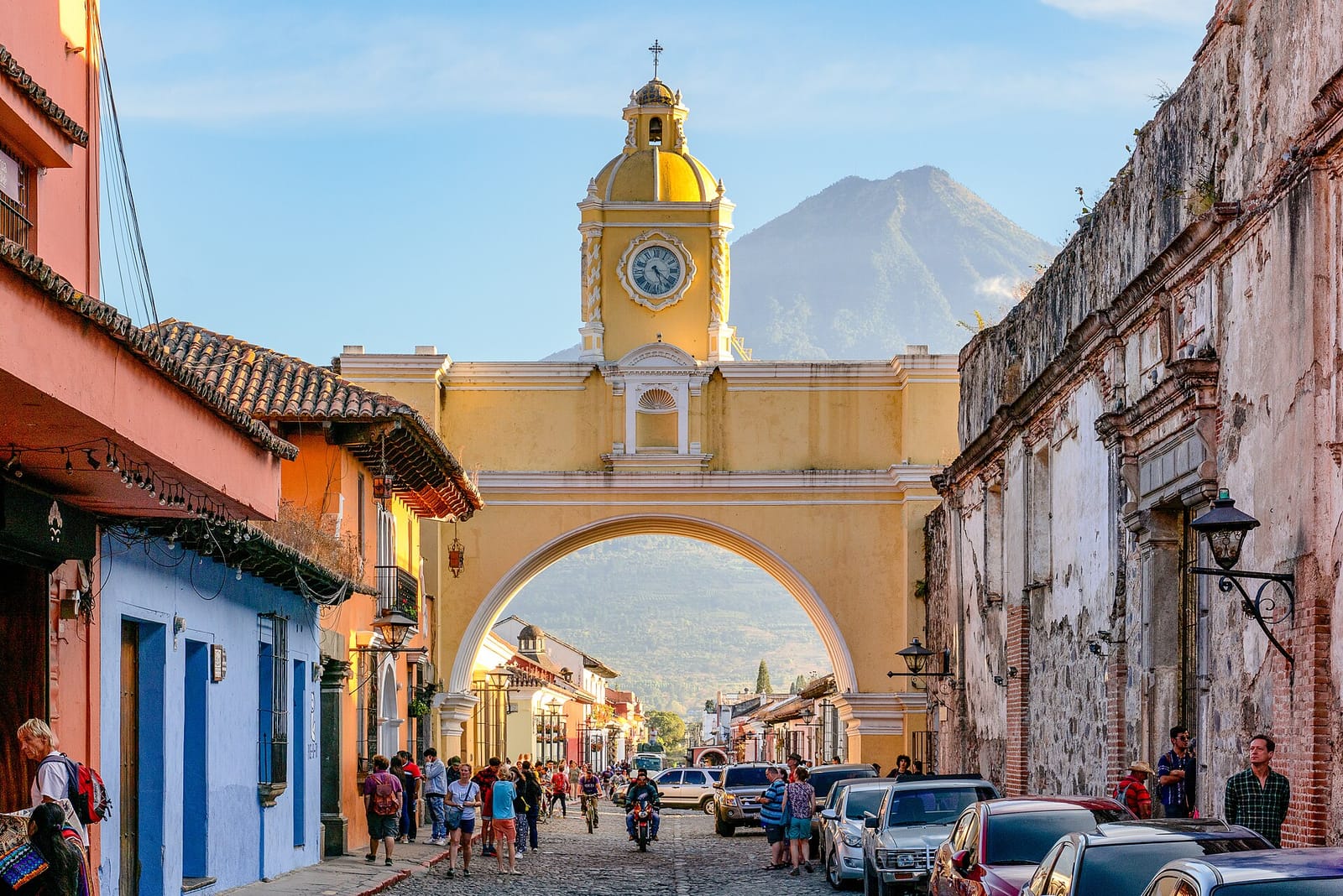
Santa Catalina Arch
Antigua's icon: a yellow arch with a clock over 5a Avenida Norte, with Volcán de Agua in the background.
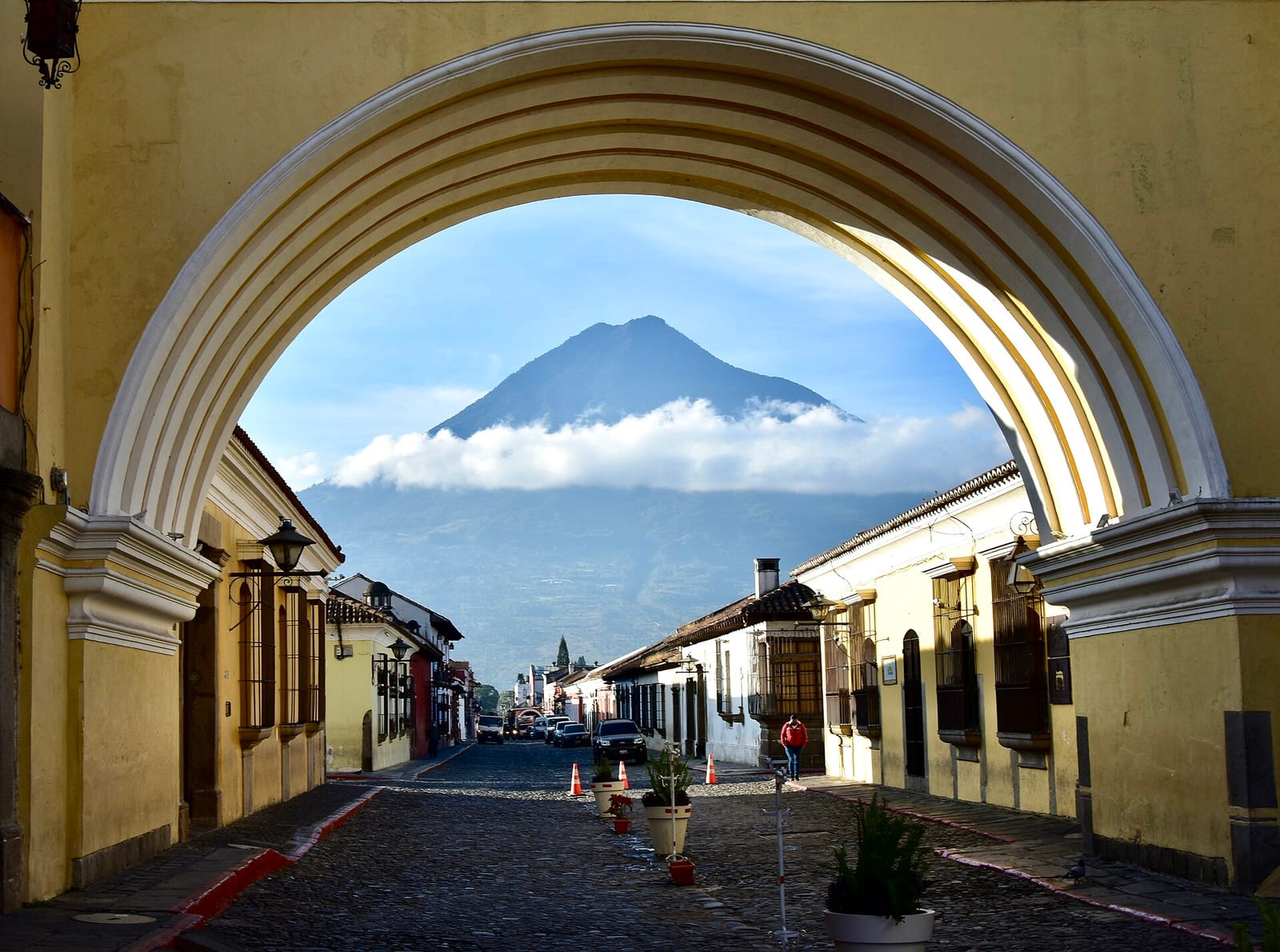
The old capital of the Kingdom of Guatemala: cobblestone streets, colonial ruins and three volcanoes on the horizon.
Antigua Guatemala is a city to explore slowly. Its cobblestone streets follow the grid laid out in the 16th century, its colorful facades hide courtyards with fountains and bougainvillea, and on almost every corner you find a church, a ruined convent or a view of Volcán de Agua.
The city was founded in 1543 in the Panchoy Valley under the name Santiago de los Caballeros de Guatemala, after a mudslide destroyed the previous settlement in the Almolonga Valley (today Ciudad Vieja) in 1541. For more than two centuries it was the capital of the Kingdom of Guatemala, a territory that stretched from Chiapas to Costa Rica, and it became one of the most important cities in Spanish America, with a university, a printing press and dozens of churches and convents.
The Santa Marta earthquakes of 1773 badly damaged the city, and the Spanish Crown ordered the capital moved to the Ermita Valley, where Guatemala City stands today. Antigua was partly abandoned, which is why it still has so many ruins left just as they fell. In 1979 UNESCO declared it a World Heritage Site.
The dry season, from November to April, brings sunny days and cool nights; it is the most popular time to visit. From May to October it rains most afternoons, but mornings are usually clear, the landscape is greener and there are fewer visitors. Holy Week is the most spectacular time of the year and also the busiest: if you are traveling then, book your hotel well in advance.
The historic center is best explored on foot: the city is flat and compact, and almost everything is less than a 15-minute walk from Parque Central. Wear comfortable shoes, because the cobblestones are uneven. To reach nearby towns there are tuk-tuks, taxis and camionetas (local buses), and for the volcanoes and farms the most practical option is to book a tour or private transport.
Automatically translated from Spanish.
Landmark
Antigua's icon: a yellow arch with a clock over 5a Avenida Norte, with Volcán de Agua in the background.
Landmark
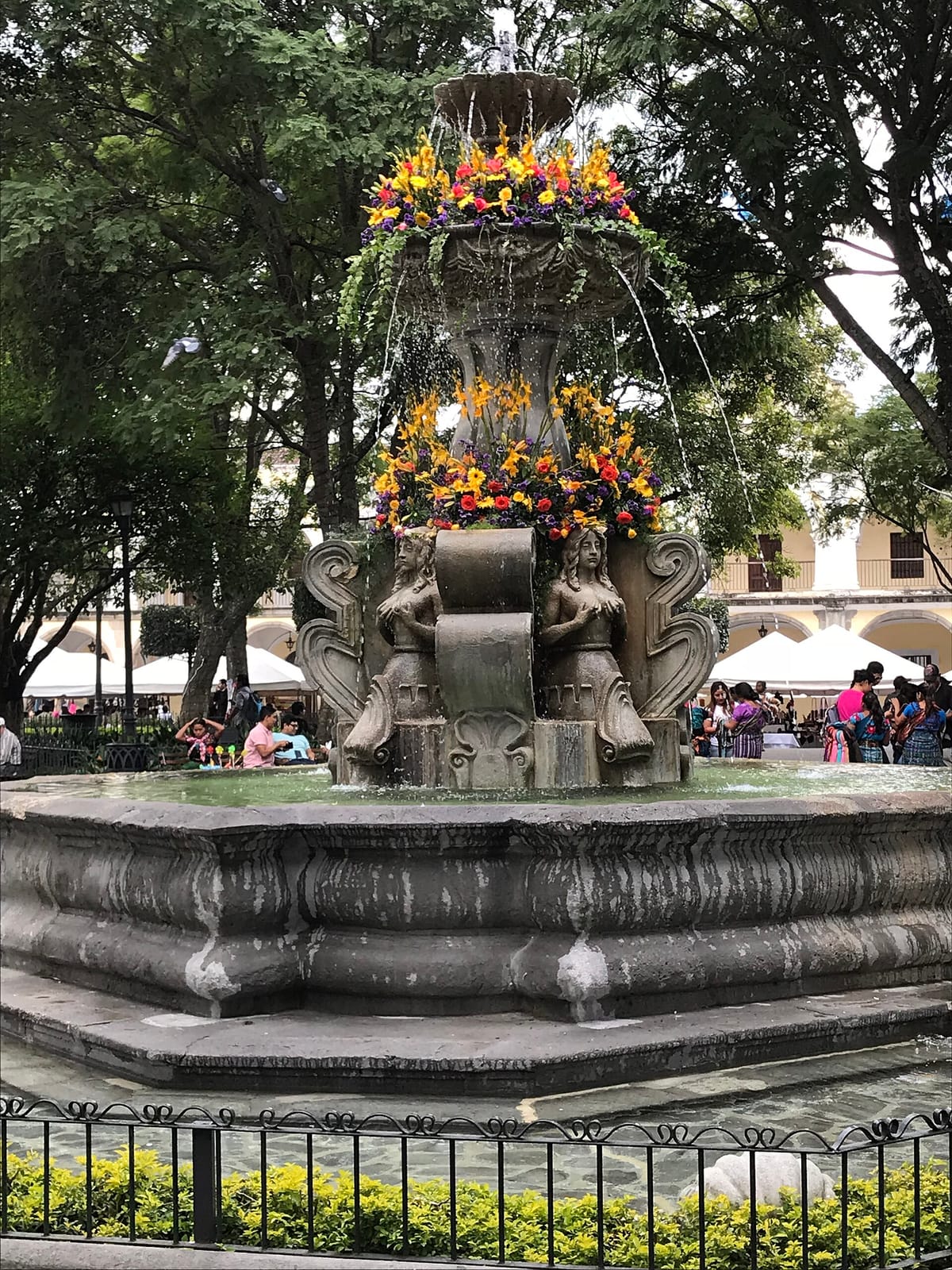
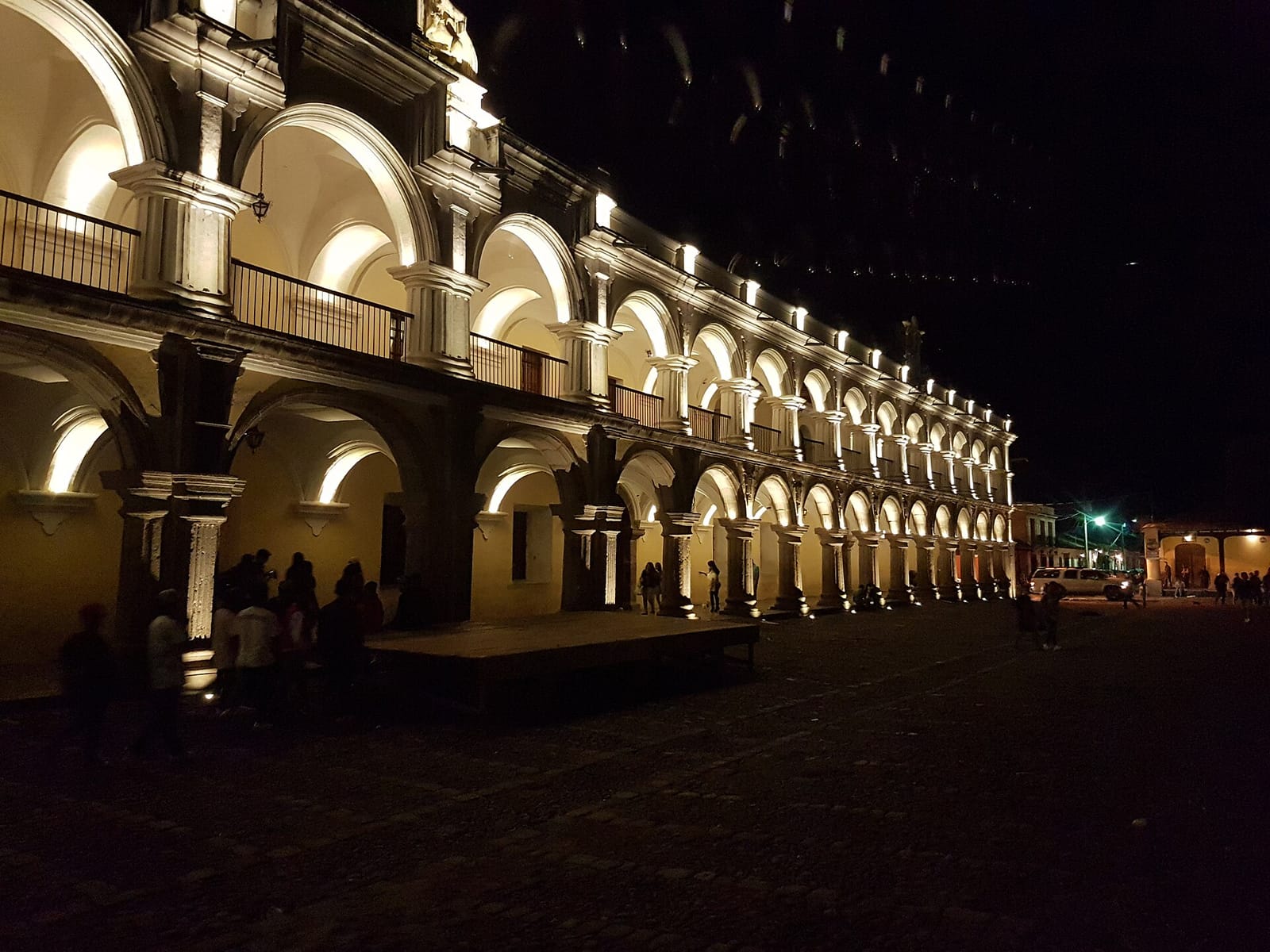
The long arcade on the south side of Parque Central, seat of the colonial government of all of Central America.
Landmark
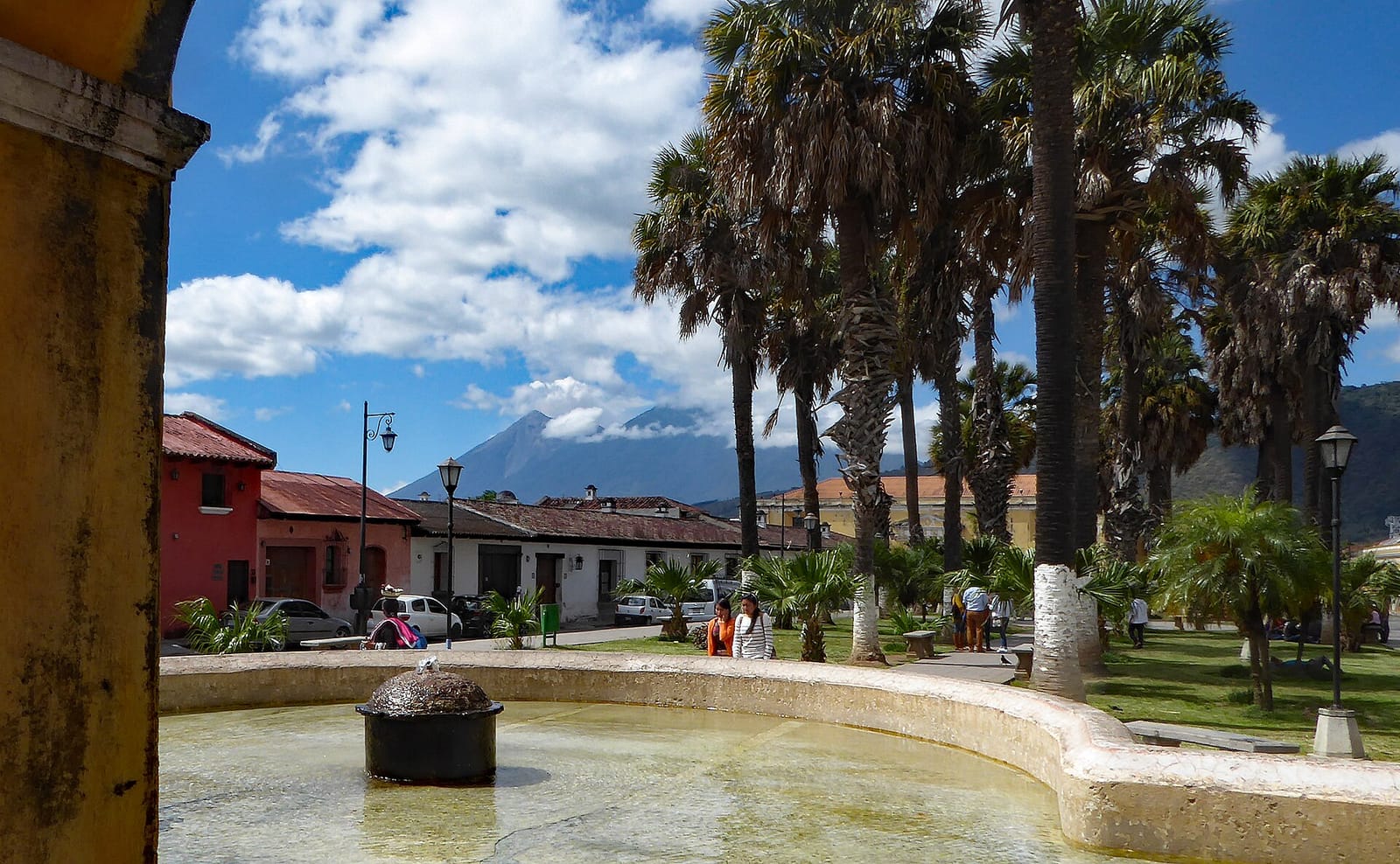
The public washing basins with stone arches, facing the Santa Clara ruins and San Pedro church.
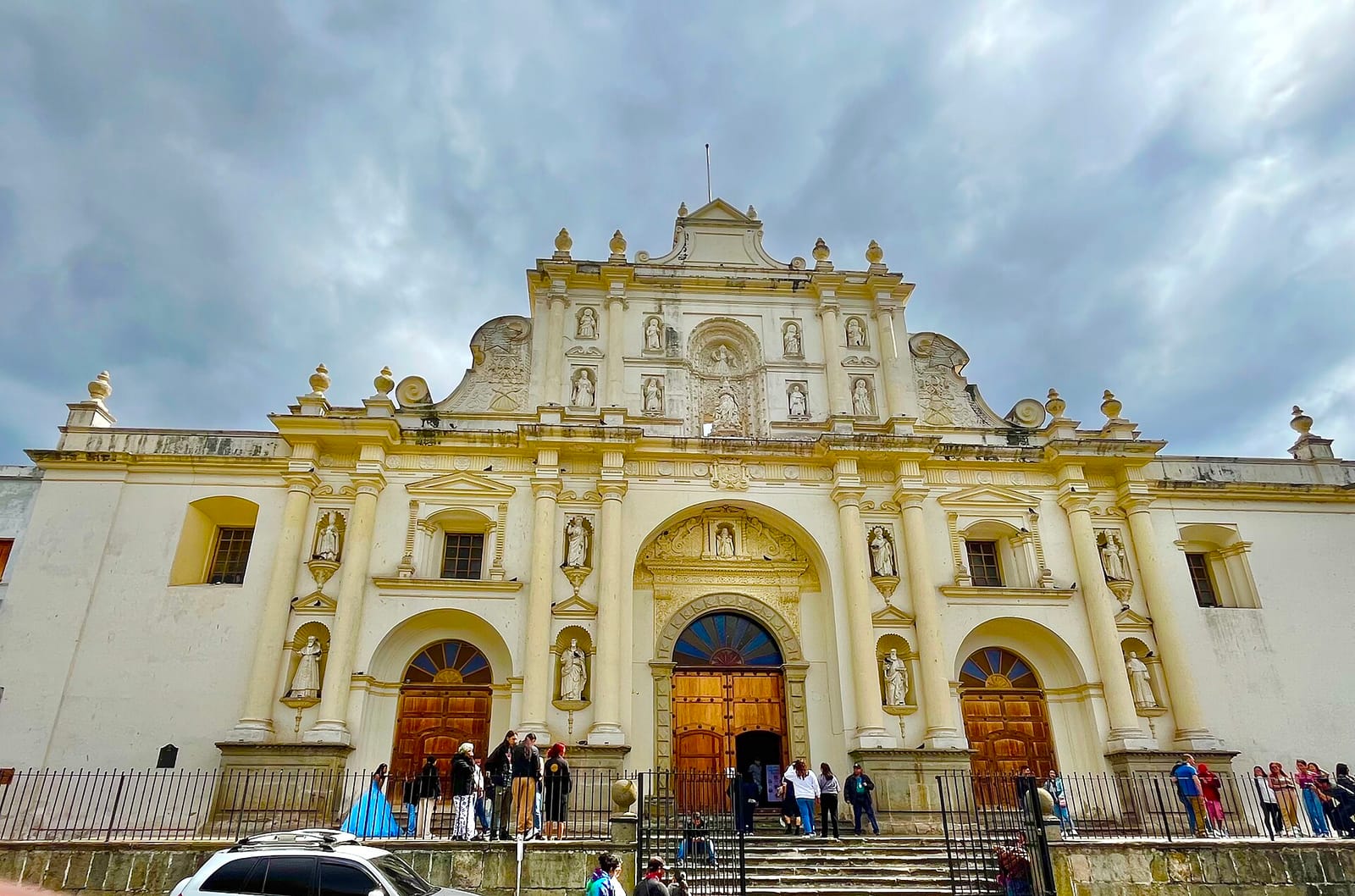
Church
The white facade facing Parque Central is only part of it: behind it lie the huge ruins of the colonial cathedral.
Church
Antigua's most photographed yellow facade with white ornaments, a jewel of Antigua Baroque.
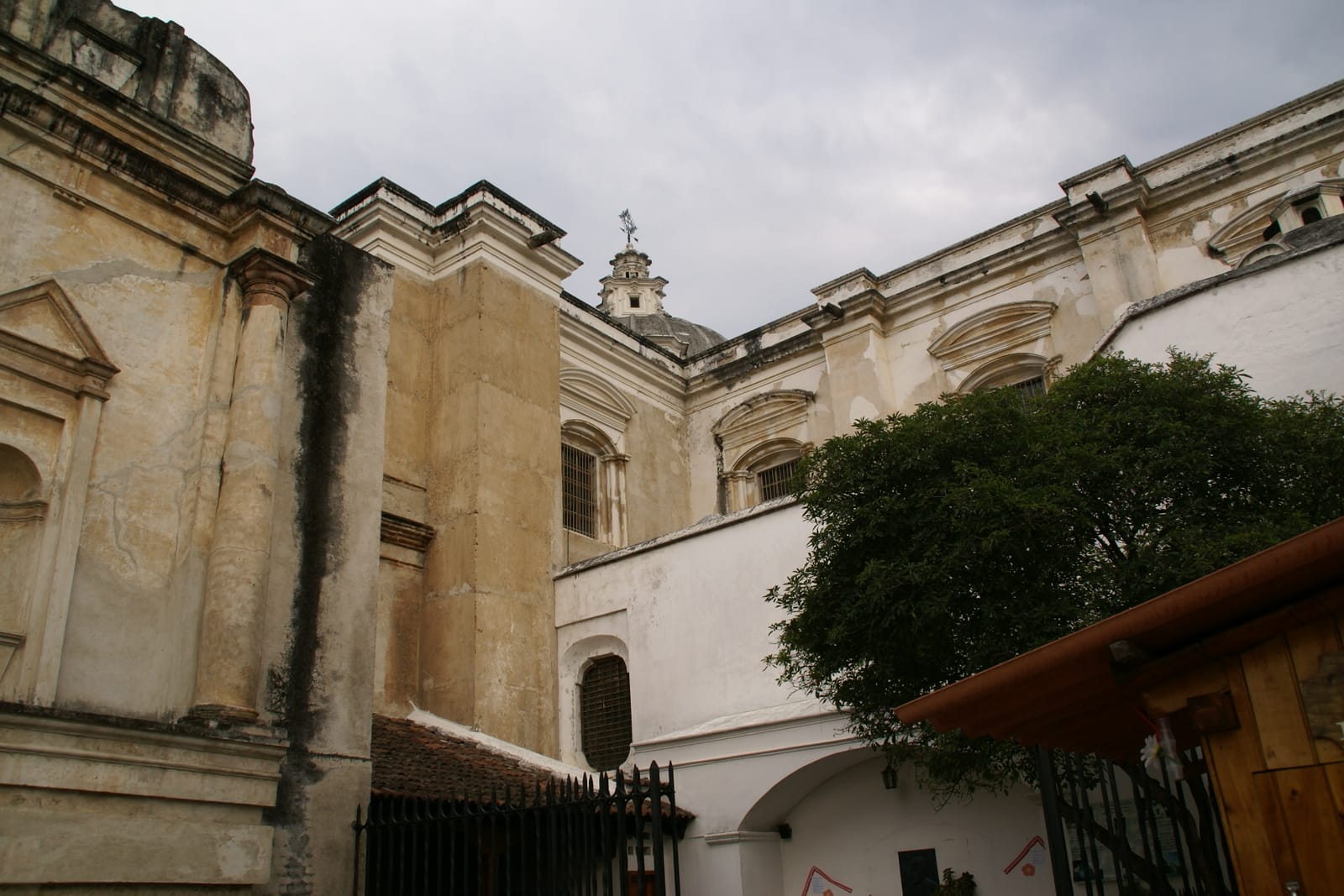
Church
A Franciscan church and pilgrimage site: the remains of Saint Brother Pedro rest here.
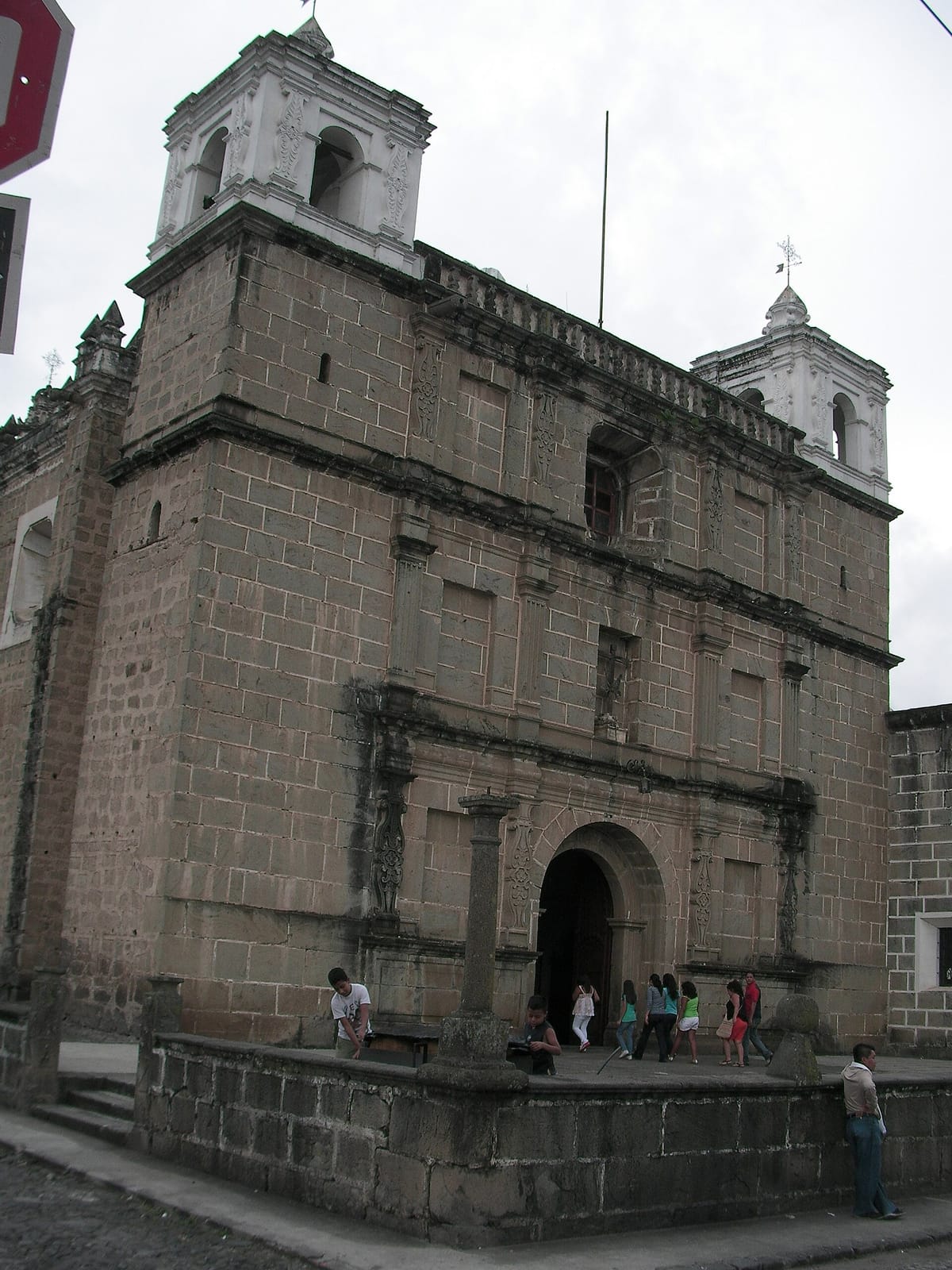
Church
A Baroque church that survived the earthquakes and is still in use, in a quiet neighborhood south of the center.
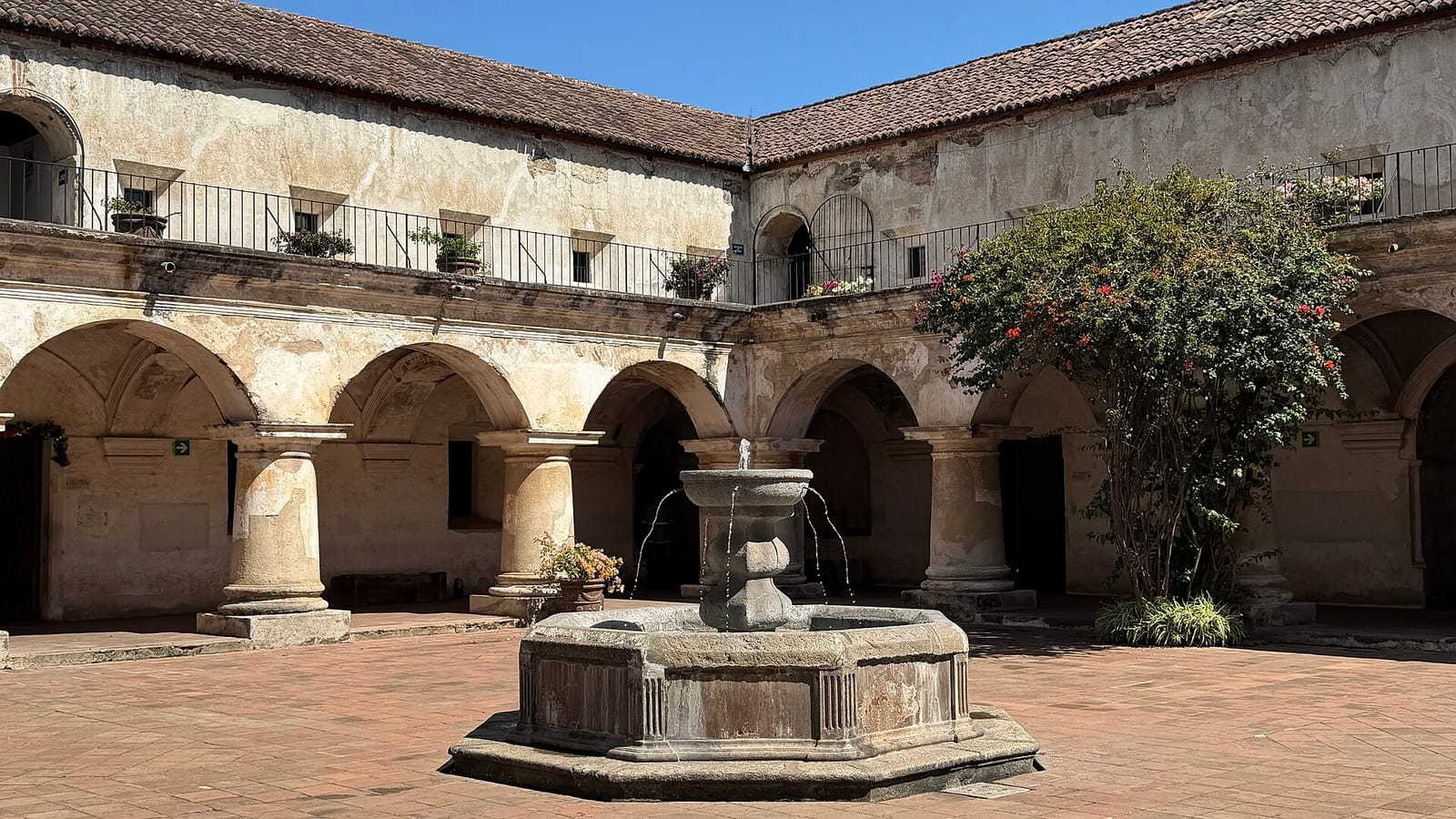
Colonial ruins
Antigua's best-preserved convent ruins, with their mysterious circular tower of cells.
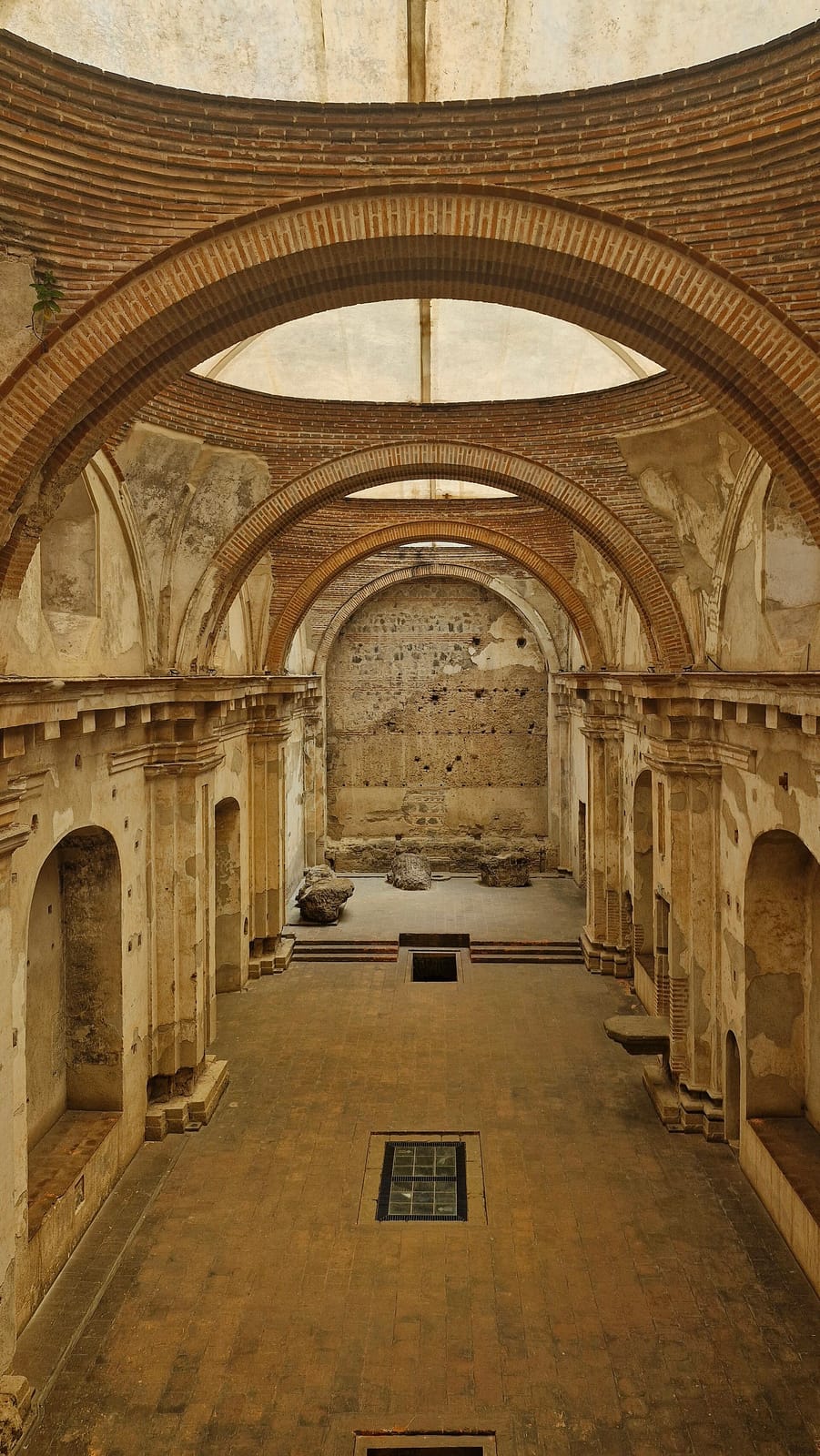
Colonial ruins
Ruins of a Poor Clares convent with a large cloister and fountain, facing Tanque La Unión.
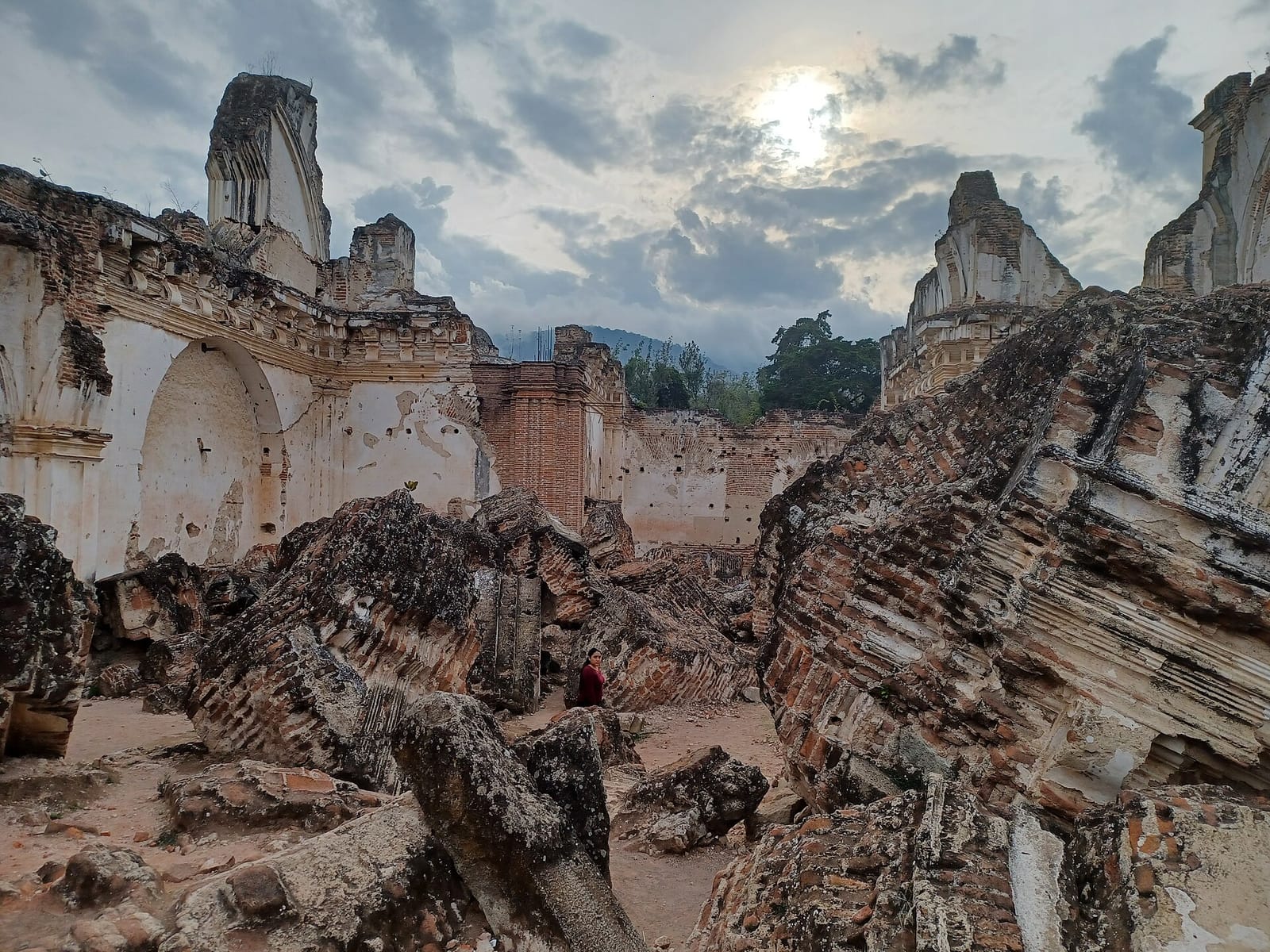
Colonial ruins
Antigua's most dramatic ruins: huge blocks from the vault lying where they fell inside the church.
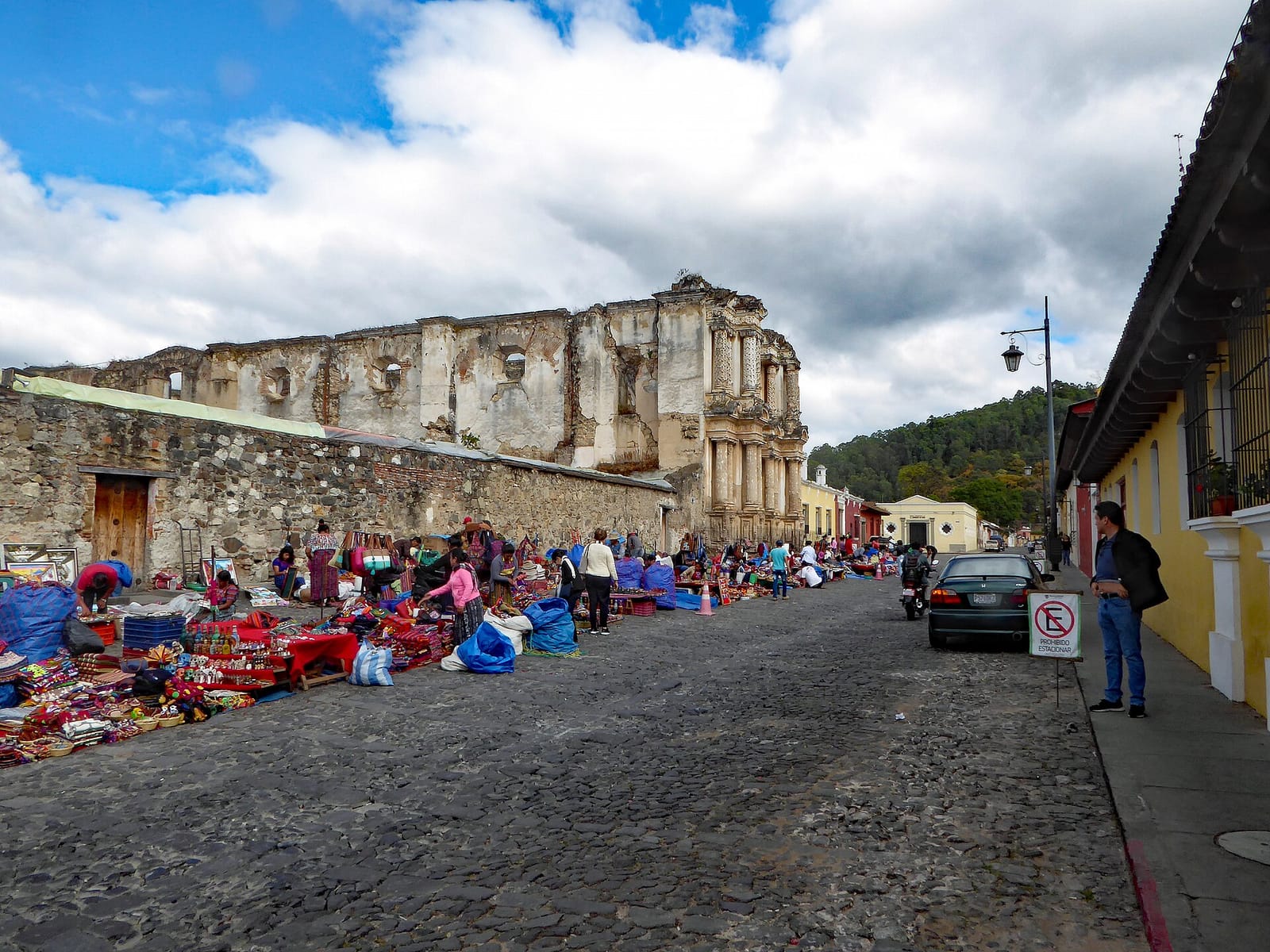
Colonial ruins
The ruined facade of El Carmen church, with a craft market next to it.
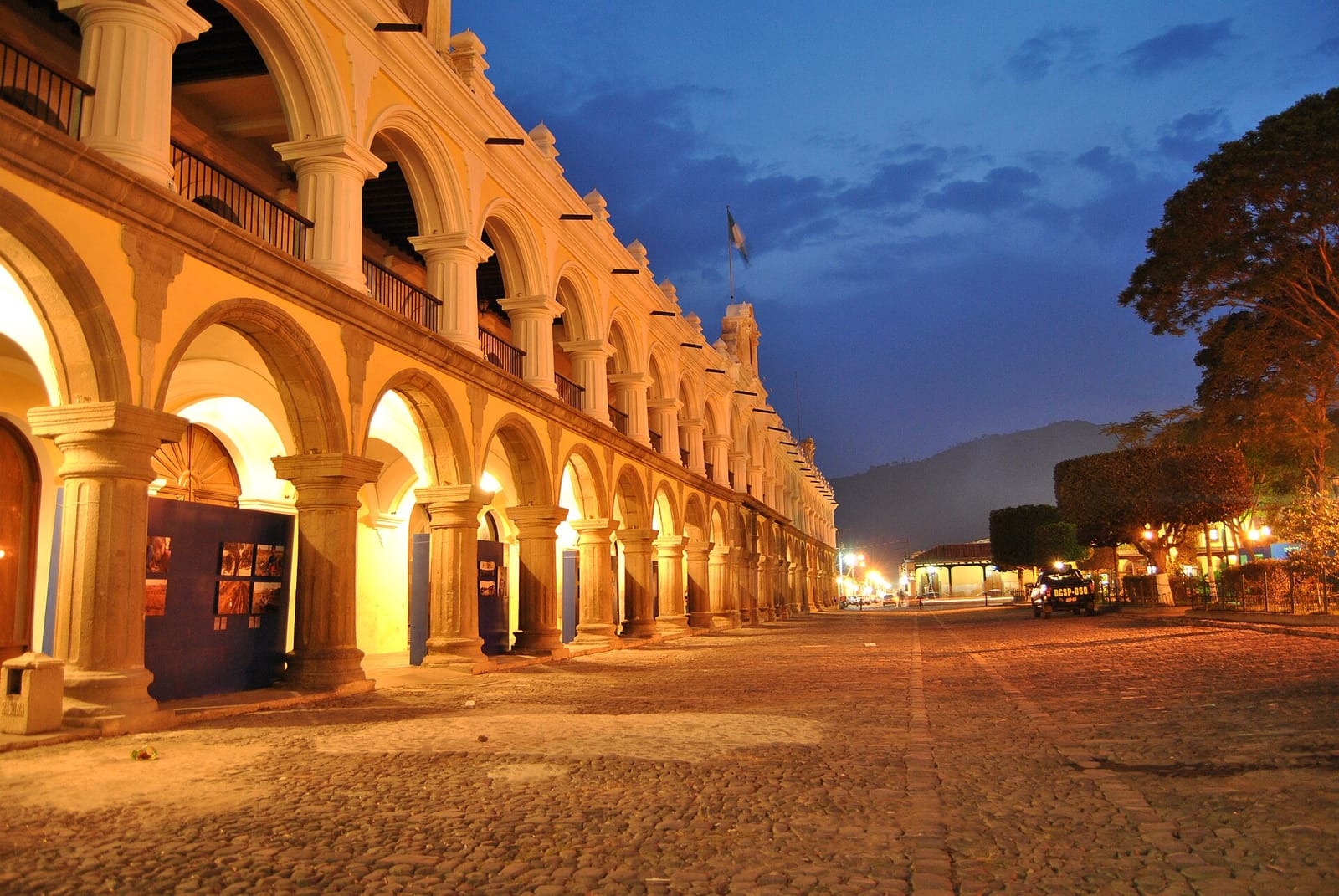
Museum
The double-arcaded building facing the park, home to the Santiago Museum and the Museum of Old Books.
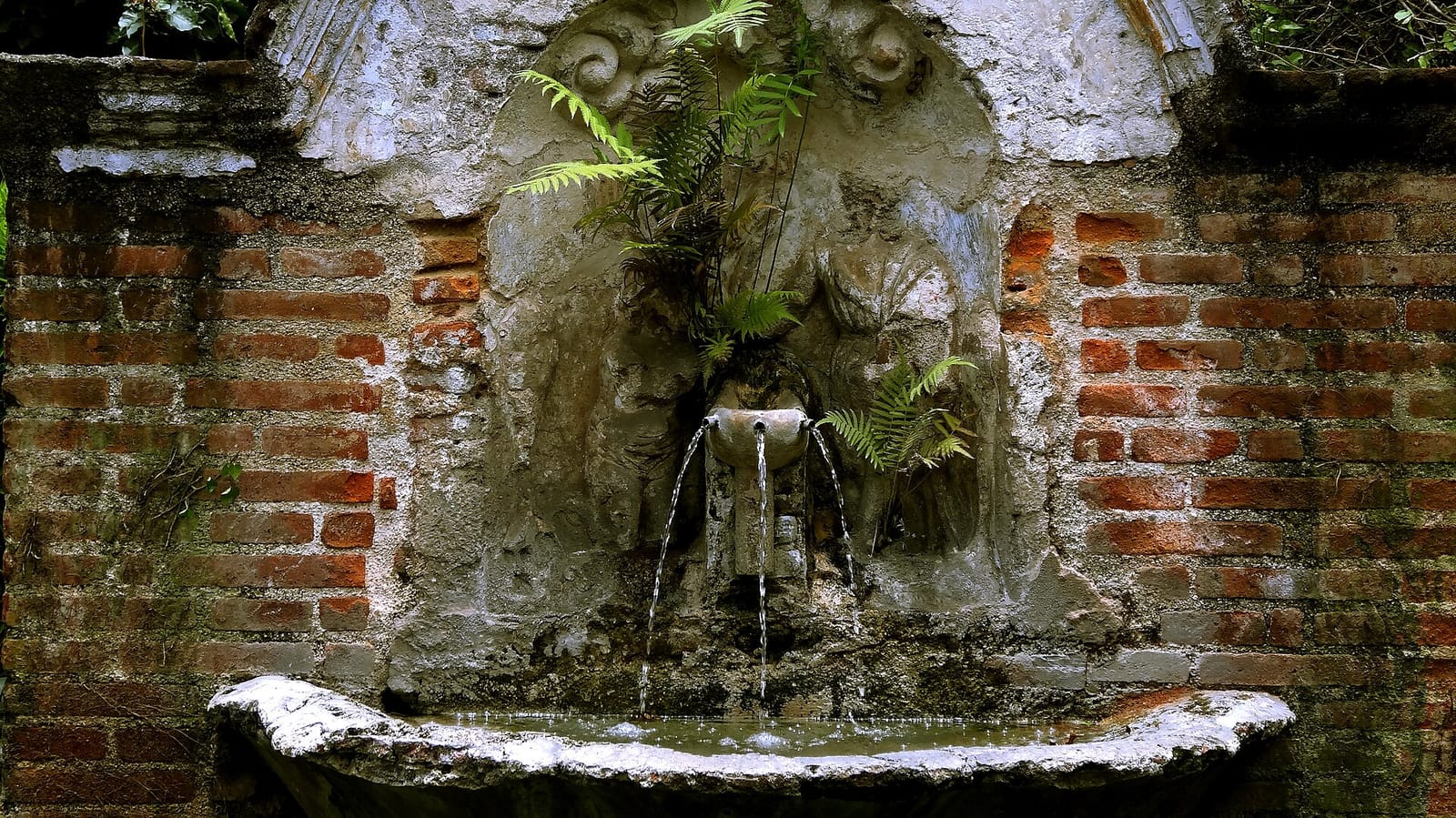
Museum
The old Dominican convent, now a hotel and a group of museums among ruins, gardens and crypts.
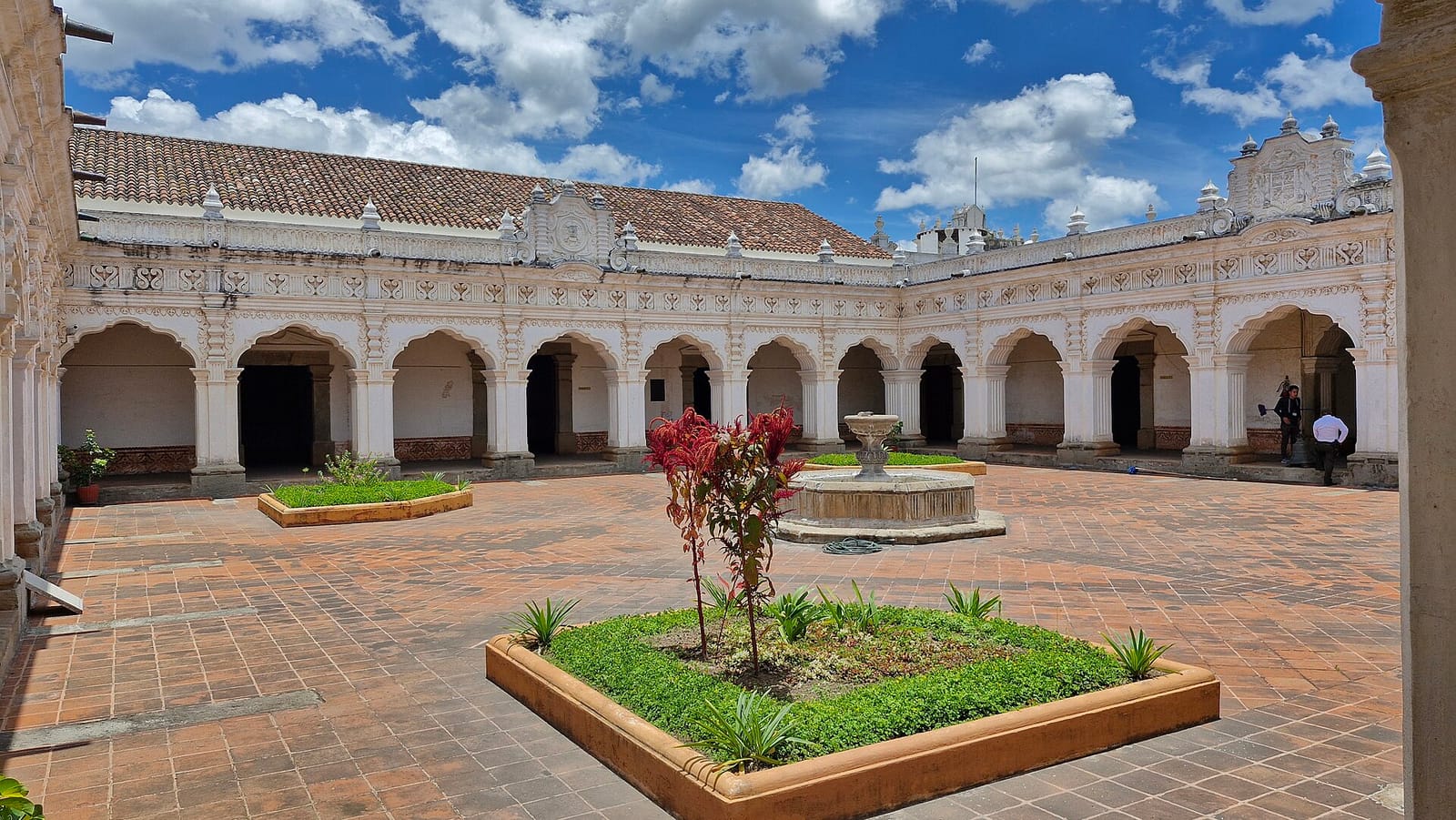
Museum
Colonial religious painting and sculpture in the building of the old University of San Carlos.
Museum
A 17th-century colonial mansion restored and furnished as it was then: the best way to see how people lived in Antigua.
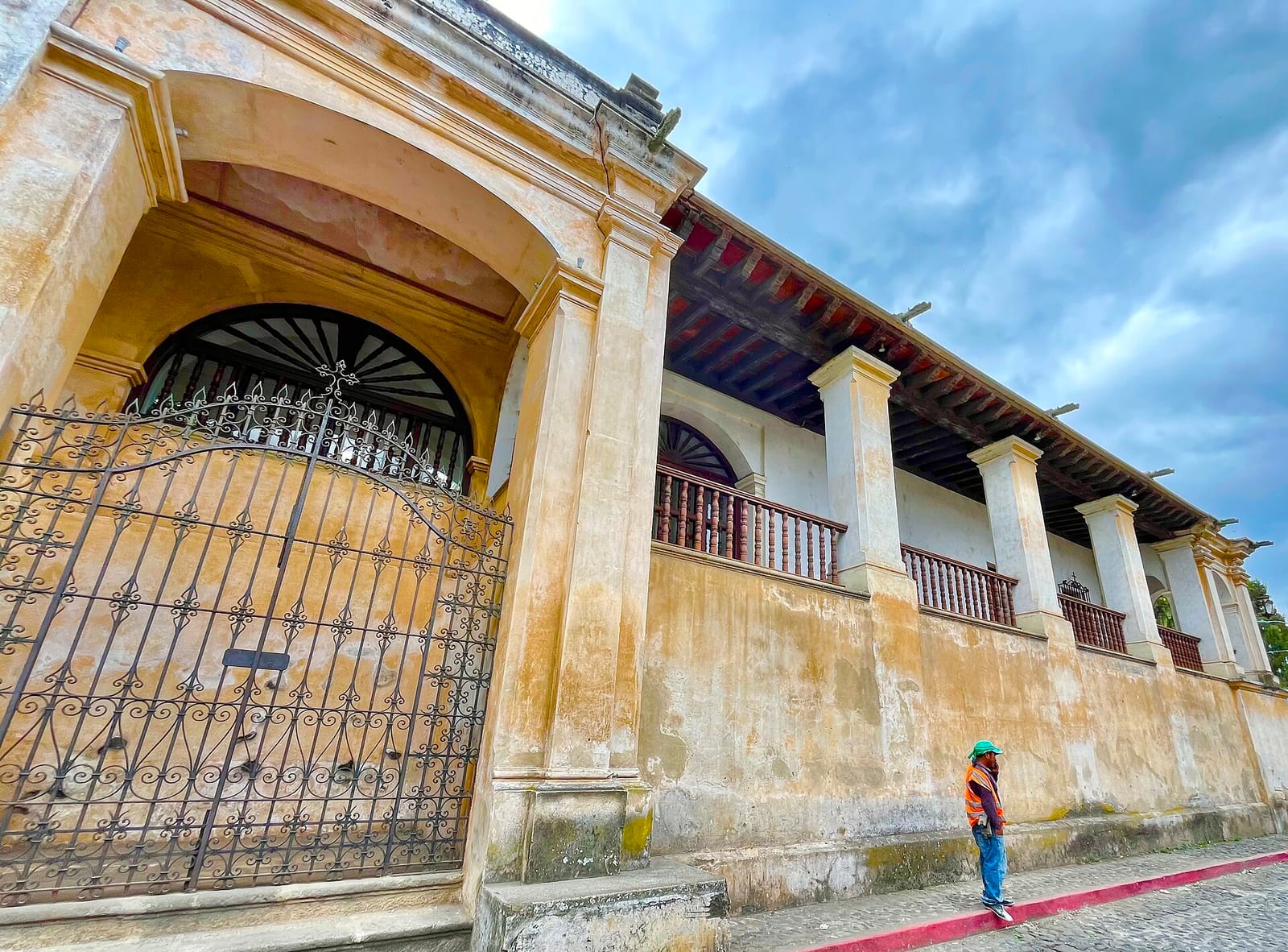
Nearby town
A town on the slopes of Volcán de Agua, with the palace of Guatemala's first bishop and views over the valley.
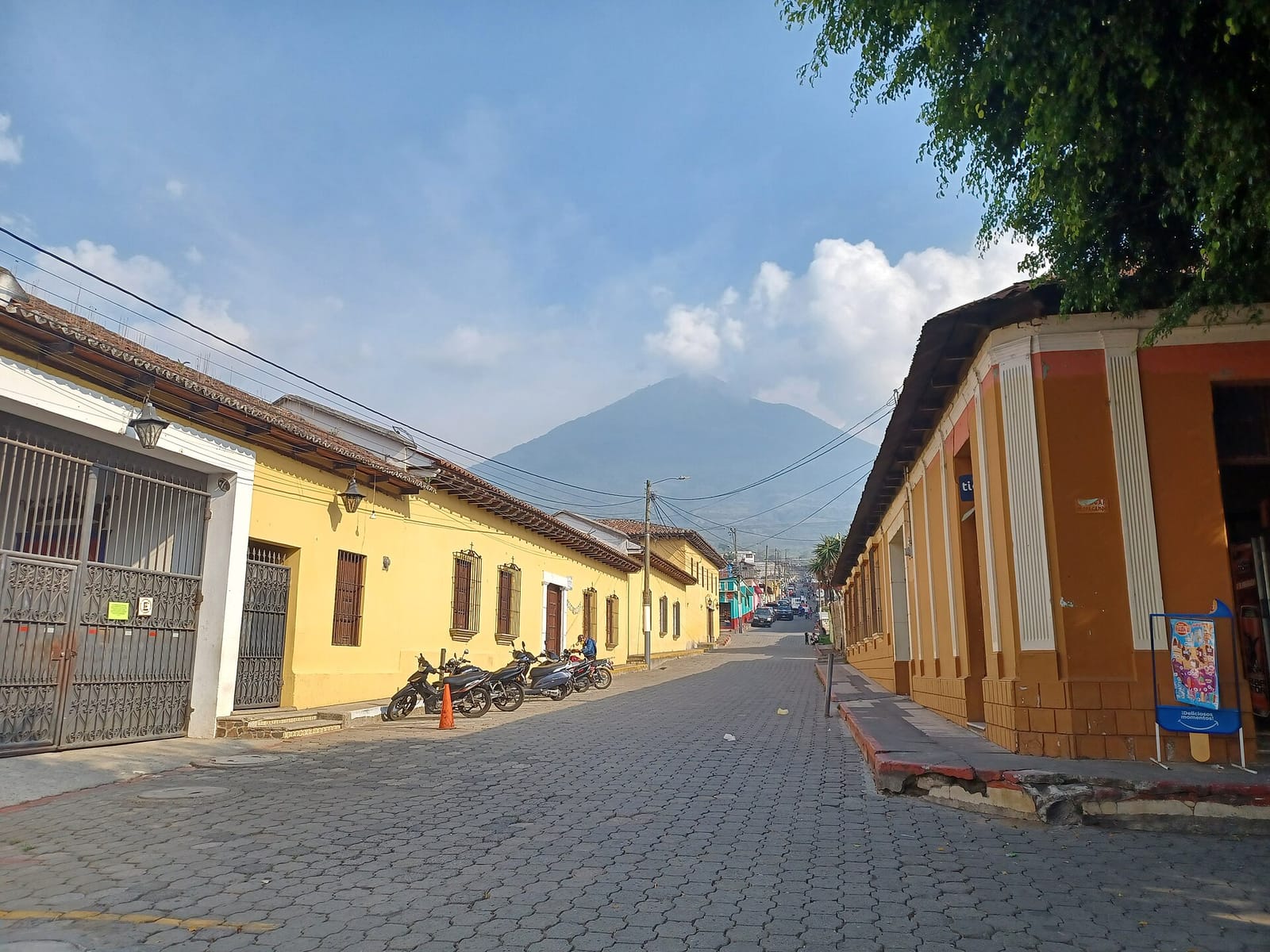
Nearby town
The valley where the capital stood before Antigua, destroyed in 1541; today a town with a colonial church.
Experience
An eco-park in the mountains inspired by the hobbits' Shire, with spectacular views of the volcanoes.
Nature and farms
A macadamia nut farm with a free tour and its famous macadamia pancakes.
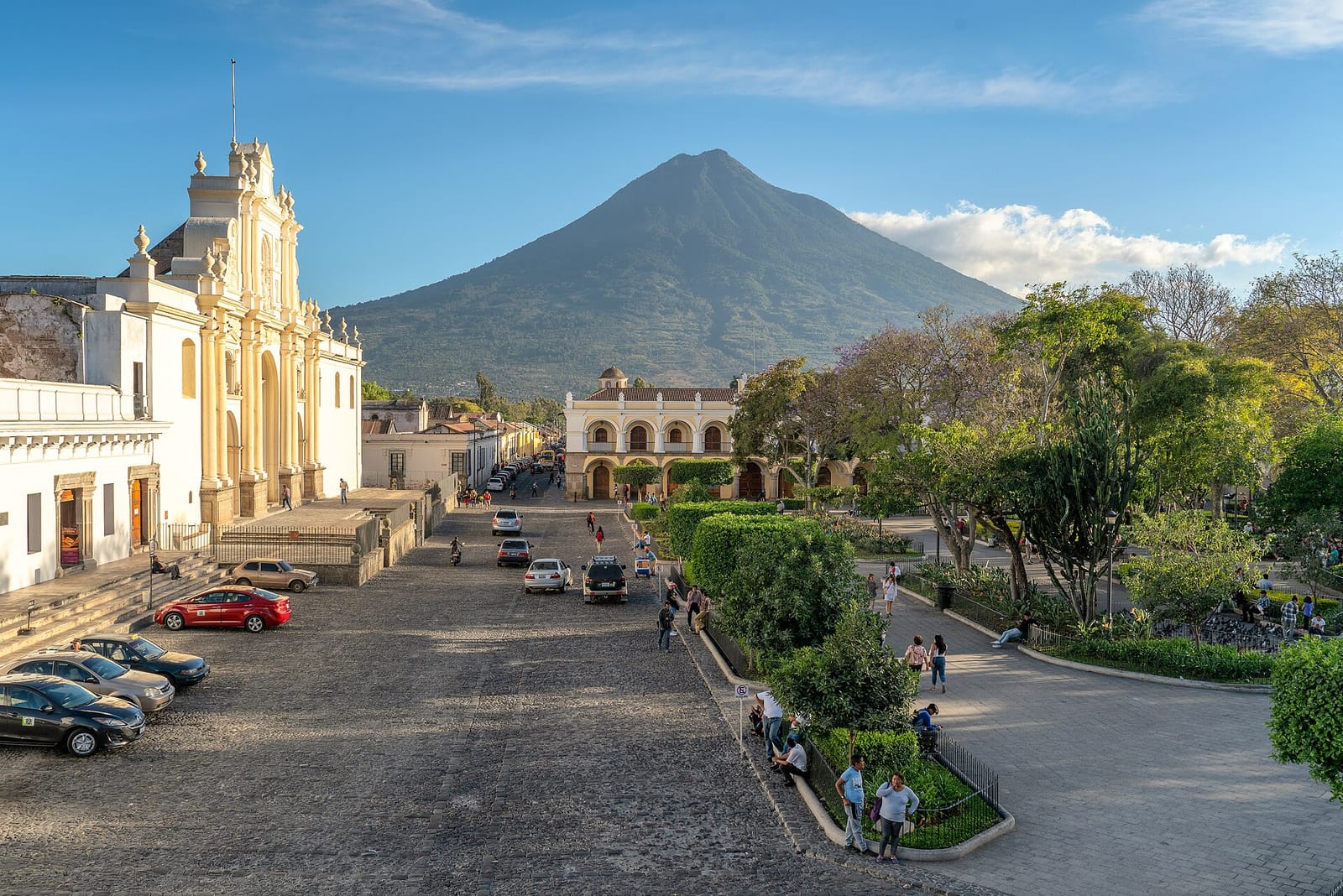
Volcano
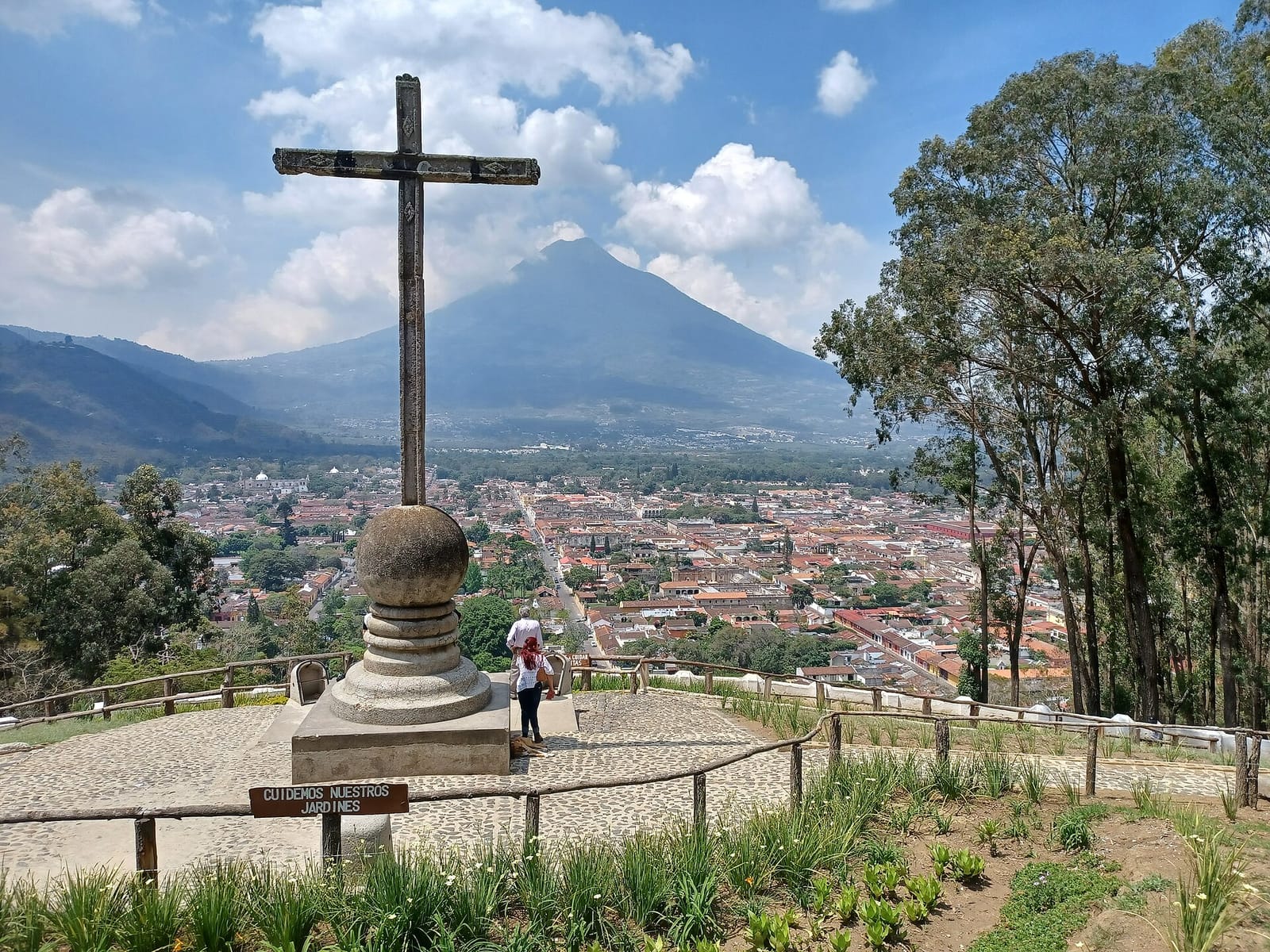
The volcano that dominates Antigua's landscape, about 3,760 meters high, visible from almost any street in the city.
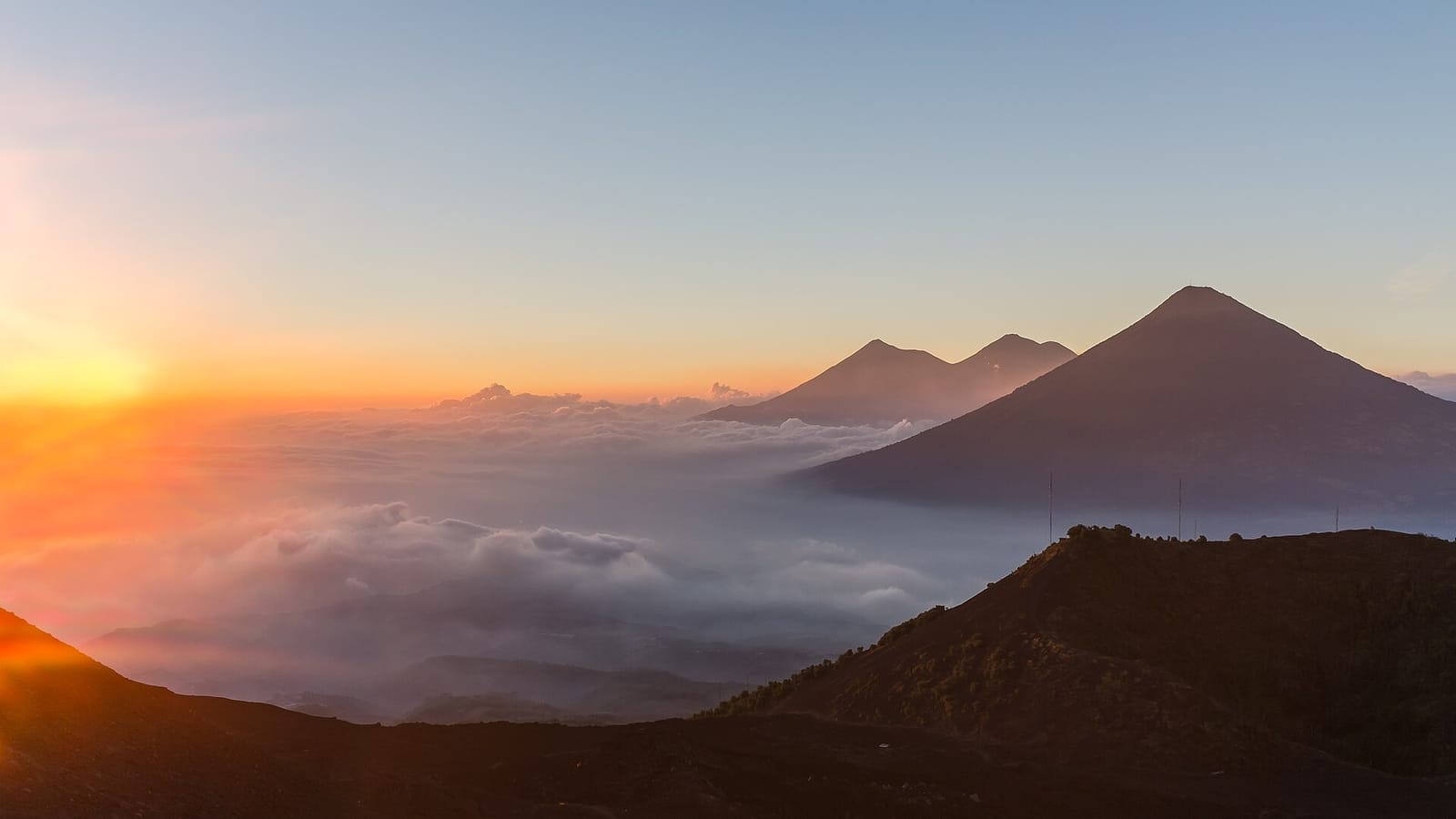
Volcano
An active volcano with an accessible hike, lava fields and views of the neighboring volcanoes.
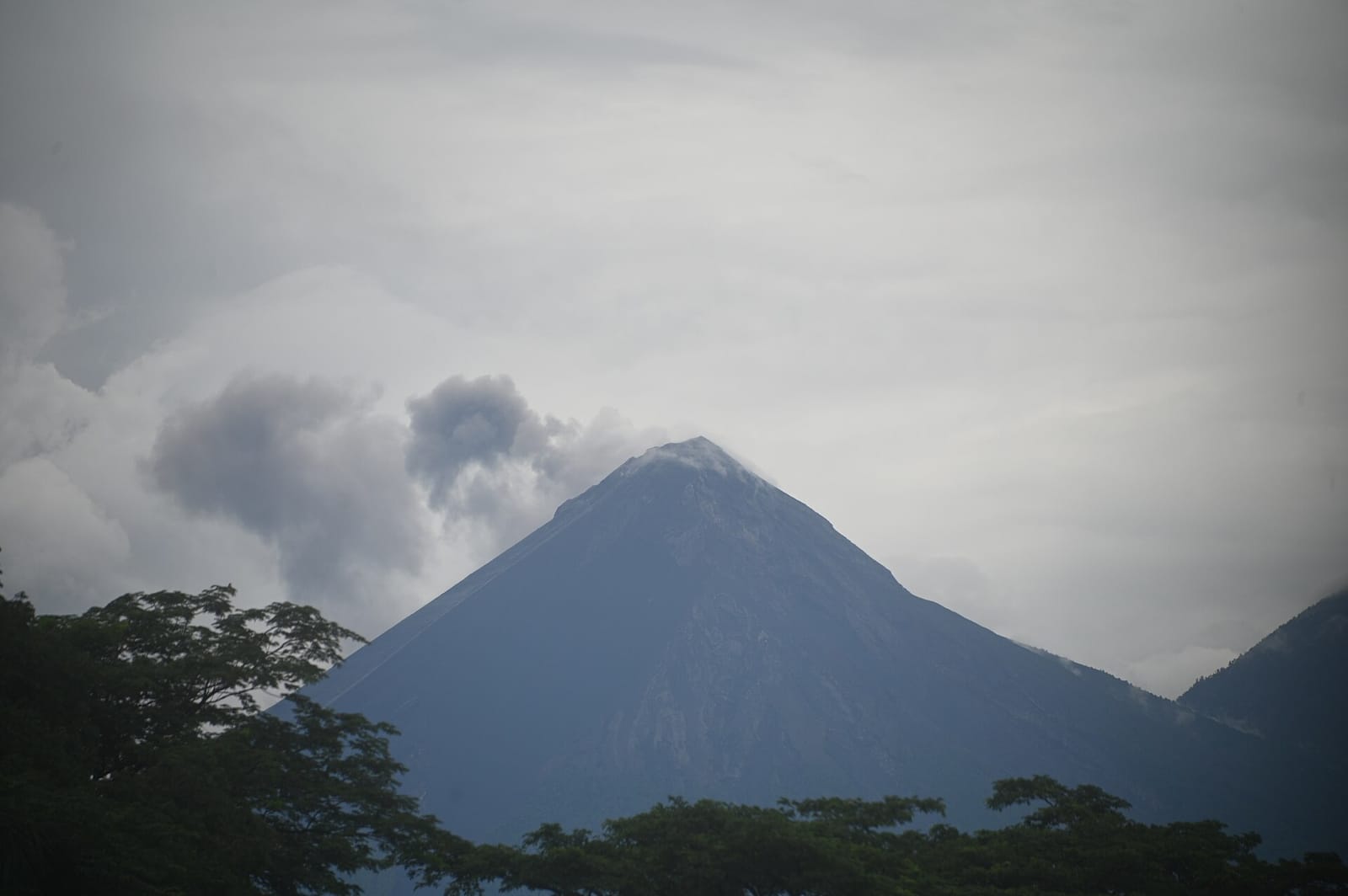
Volcano
Guatemala's big challenge: sleep facing Volcán de Fuego and watch it erupt at night.
Hotel · Historic center
100 m from Parque Central
Price not published
View hotelGuesthouse · Historic center
100 m from Parque Central
Price not published
View hotelHotel · Historic center
100 m from Parque Central
Price not published
View hotelHotel · Historic center
100 m from Parque Central
Price not published
View hotelHotel · Historic center
150 m from Parque Central
Price not published
View hotelHotel · Historic center
150 m from Parque Central
Price not published
View hotel